
Dog Awareness
Did you know?
2,019 posties were injured by dogs last year.
That’s 38 animal bites a week.
Over half (52%) of dog attacks took place at the front door.

Even the most lovable dog can be a danger to postal workers. Dogs are territorial by nature and if they feel they need to protect their family, they can become unpredictable. Please help us to deliver your post safely by keeping your dog secure and out of the way before the post person arrives.
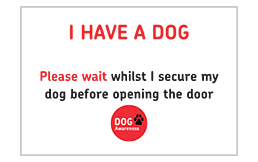
GOT A DOG AT HOME?
Print and display this card so delivery drivers wait while you secure your dog.
Did you know?
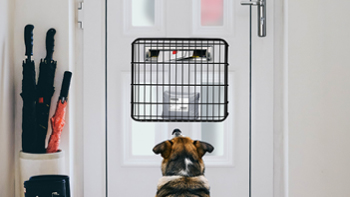
Secure your dog away from the letterbox.
Invest in a letter cage or external delivery point to stop bites through the letterbox.
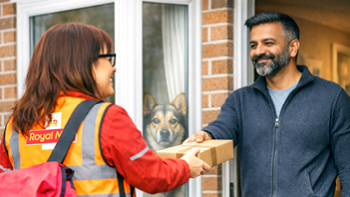
Ensure your dog is secure before you open the door.
52% of dog attacks took place at the doorstep last year, help us deliver safely.
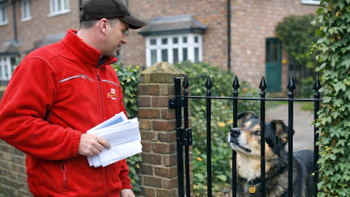
Close doors and gates to prevent loose dogs reaching the delivery point.
Please close doors and gates to prevent your dog accessing the delivery point or street.
Latest dog awareness report
Royal Mail announced on 6 July 2026 that 2,019 dog attacks on its staff were reported over the past year, marking an 8% decrease compared to the previous reporting period. Whilst the company welcomes the drop, attacks remain unacceptably high. The figure equates to an average of 38 attacks every week across the UK, with some leading to permanent and disabling injuries.
This year also saw a reduction in attacks causing serious and significant injury to postal workers. There were 61 significant injuries recorded in 2025/26, compared with 74 the previous year — a 17% reduction. However, the number of serious injuries remains a cause for concern.
The figures have been released at the start of the 14th annual Dog Awareness Week, which will run from 6-12 July and actively encourages responsible dog ownership. Royal Mail is appealing to dog owners to ensure they understand the devastating impact of dog attacks on postmen and postwomen and take proper measures to ensure their pets pose no threat to delivery postal workers, or the community at large, through responsible dog ownership.
For the second consecutive year, the S (Sheffield) postcode recorded the highest number of incidents, with 61 attacks reported. Although still the postcode area with the greatest number of attacks, the total figure was down 8% on last year when 66 attacks were recorded.
Two postcode areas were ranked joint second for dog attacks on postal workers — DN (Doncaster) and GU (Guildford), each recording 53 incidents.
They were followed by NE (Newcastle) and PO (Portsmouth) postcode areas in third place, with 50 attacks each. (See below for further details on the top 10 dog attack hotspots.)
The 10 most high-risk postcode areas for dog attacks on Royal Mail postal workers are:
| Position | Postcode area | Town/City | Number of reported dog attacks |
|---|---|---|---|
| 1 | S | Sheffield | 61 |
| 2 | DN | Doncaster | 53 |
| = | GUI | Guildford | 53 |
| 3 | NE | Newcastle | 50 |
| = | PO | Portsmouth | 50 |
| 4 | NG | Nottingham | 48 |
| 5 | SA | Swansea | 44 |
| 6 | BT | Belfast | 37 |
| 7 | ME | Medway | 36 |
| 8 | TN | Tonbridge | 35 |
| = | YO | York | 35 |
| 9 | LE | Leicester | 34 |
| 10 | ST | Stoke-on-Trent | 31 |
There were 1,048 (52%) attacks at the front door, a 4% increase on the 1,005 last year. These figures highlight that the majority of incidents happen on private property, where postal workers have a legal right to access. Dog owners are responsible for ensuring their pets are under control at all times to prevent harm to authorised visitors.
A further 511 (25%) dog attacks took place in the garden, drive or yard. There were 135 (7%) attacks in the street or road.
There were 324 injuries suffered through the letterbox - accounting for 16% of attacks on postal workers. Letterbox attacks were the subject of a 2020 High Court ruling that stated dog owners (or those in care of a dog) can be prosecuted if their pets have free access to the letterbox and cause injury to any delivery operative, whether the owner is at home or not.
Dog attacks on Royal Mail colleagues resulted in 3,442 days of absence in 2025/26 - with the longest period ongoing at 300+ days.
There are approximately 15.5 million pet dogs in the UK, according to UK Pet Food’s Pet Data Report 2026.
Lizz Lloyd, Health & Safety Director at Royal Mail, said: “While it’s encouraging to see dog attacks on our colleagues fall by 8% last year, these incidents remain a serious risk to postal workers, resulting in painful injuries and lasting distress. Every attack is one too many.
“We continue to raise awareness of the issue among the public, but preventing attacks starts at the doorstep. We’re urging dog owners to take simple steps, such as keeping pets secure before opening the door, to help keep our people safe.”
1st
The S (Sheffield) postcode area was ranked the highest risk location for Royal Mail postal workers for the second consecutive year, with 61 dog attacks reported. This marks an 8% decrease from the 66 attacks recorded in 2024/25. Notably, the S postcode area has appeared on every high risk list since postcode-specific data began and, for the fifth time, tops the ranking for dog attacks.
2nd
The DN (Doncaster) and GU (Guildford) postcode areas are the second joint highest-risk locations with 53 dog attacks on Royal Mail postal workers reported in each location.
The DN (Doncaster) postcode has seen a 26% increase in dog attacks, appearing in the top 10 most dangerous locations for the second consecutive year and for only the second time since Royal Mail began publishing these figures. Attacks have risen from 42 reported in 2024/25.
The GU (Guildford) postcode area appears on the high-risk postcode list for the seventh time since Royal Mail began publishing postcode-specific figures. The total represents a slight 2% decrease from 54 attacks reported last year.
3rd
The NE (Newcastle) and PO (Portsmouth) postcode areas are the third joint highest-risk locations with 50 dog attacks on Royal Mail postal workers reported in each location.
The NE (Newcastle) postcode area saw an 11% increase on dog attacks this year, up on 45 in 2024/25. This is the 5th time the area has appeared in the high-risk locations.
Dog attacks in the PO (Portsmouth) were down on last year – compared to 60 for 2024/25 – equating to a 17% drop – but attack numbers are significant enough that it remains in the high-risk list. The postcode area came joint top of dangerous locations for dog attacks in 2023/24. The PO postcode area has featured in the top, most high-risk areas for dog attacks for nine consecutive years and 10 in total since Royal Mail began publishing attack figures.
4th
The NG (Nottingham) postcode saw 48 dog attacks on postal workers this year. This is a 2% decrease on the 49 attacks in 2024/25. This is the sixth consecutive year that the NG postcode area has appeared in the list of most dangerous locations for dog attacks – last year it was the 5th most unsafe location in the UK for dog attacks on Royal Mail postal workers. The postcode area has featured in the high-risk locations 10 times since Royal Mail began reporting postcode specific figures.
5th
The SA (Swansea) postcode area is in fifth place for dog attacks on Royal Mail postal workers with 44 attacks reported. This is the third time the SA postcode area has featured in the top 10 list for dog attacks. Dog attacks have risen from 25 last year, marking a 76% increase.
6th
The BT (Belfast) postcode area reported 37 dog attacks this year - an 18% drop on last year compared to 45 incidents reported in 2024/25. Last year the postcode area was the 8th most dangerous place for attacks. The BT postcode area has appeared in every dog attack hot-spot list since Royal Mail began releasing location specific date in 2013. It has been the most dangerous location for attacks five times.
7th
The ME (Rochester) postcode area reported 36 attacks on postal workers during 2024/25 making it the 7th most dangerous postcode area in the UK for dog attacks on postal workers. This figure represents a 38% increase on the 26 attacks reported in the previous year. This is the third time the postcode has appeared in the most high-risk list since Royal Mail began reporting postcode specific figures.
8th
The TN (Kent/Sussex/Surrey) and YO (York) postcode areas are the eighth joint highest-risk locations with 35 dog attacks on Royal Mail postal workers reported in each location.
The TN (Kent/Sussex/Surrey) postcode area recorded a 38% decrease in dog attacks on Royal Mail postal workers this year, following a 33% increase in 2024/25. The TN postcode area has appeared on the list of most dangerous areas for dog attacks for 12 consecutive years and ranked as the most dangerous location for postal workers in 2022/23.
The YO (York) postcode area has appeared on the list of dangerous postcodes three times since Royal Mail began reporting postcode specific figures. The last time it appeared was in 2014/15. This year’s figure represents a 25% increase on the 28 incidents reported in 2024/25.
9th
The LE (Leicester) postcode area appears on the list of highest risk locations for the first time, with 34 attacks recorded — a 31% increase on the 26 incidents reported in 2024/25.
10th
The ST (Staffordshire) postcode area has featured on Royal Mail’s list of most dangerous areas for the second consecutive. This year, 31 dog attacks on postal workers were reported—a 23% drop on the 40 incidents recorded in 2024/25.
Katy's Story
Katy has worked as a postie in Bristol for around three years and has been on the same delivery route for more than two and a half years. In January 2026, Katy was seriously injured in a dog attack while out delivering mail on her usual route.
Katy says:
I love my job. I know my customers really well and feel part of the wider community. I meet lots of lovely dogs on my round, and the vast majority are well behaved and kept under control.
In this case, the dog was one I knew well and had been aware of since it was young. It had always been friendly towards me and had never shown any signs of aggressive behaviour before. That was one of the most shocking things about the incident. But dogs are naturally territorial animals and, however well behaved they may normally be, they can sometimes react unpredictably.
I was out on my round when I turned a blind corner into a shared driveway area. The dog approached me at speed from behind and everything happened so quickly that I had no time to react. I suddenly felt the impact as it clamped onto my lower leg, knocking me off my feet.
Before I knew it, I was on the ground in severe pain. The dog bit me just below the knee, causing five puncture wounds, three of them very deep. Two required stitches and the attack also caused tendon damage that I still live with today. The injuries were far worse than I initially realised. There was significant bleeding from the wound and some of the deeper bites had torn the skin, requiring urgent medical treatment.
The physical injuries were serious. I couldn't walk unaided for around three weeks, couldn't drive for approximately three months and was off work for three months while I recovered. The wounds later became badly infected, which made an already painful recovery even more difficult. One of the puncture wounds took weeks, if not months, to heal properly, and I still live with the effects of the injury today.
The physical injuries were painful and frustrating, but the biggest impact was psychological. I became very anxious and depressed after the attack. Even now, six months later, it still affects me.
I'll never quite be the same person I was before. The scars on my leg are permanent, but the mental scars run much deeper.
I'm not frightened of dogs, but the incident has made me much more cautious. It showed me that these situations can happen unexpectedly, even with dogs that have never shown any signs of aggression before.
I now take extra care whenever I hear a dog barking or see a dog near a property. I make additional checks and ensure it is safe before approaching a door. It has definitely made me more vigilant.
My message to dog owners is simple: please don't take any risks. Your dog may be the friendliest dog in the world, but animals can act unpredictably. Keeping your dog safely secured before opening the door or accepting a delivery can prevent serious incidents from happening.
If you know your dog is excitable or boisterous, take extra precautions such as using dog gates or an external letterbox. These simple steps can make a huge difference.
I wouldn't want anyone else to go through what I experienced. It was a horrible ordeal and something that continues to affect me today. By taking a few simple precautions, dog owners can help keep posties, visitors and their dogs safe.
Even the most lovable dog can be a danger to postal staff. Dogs are territorial by nature and if they feel they need to protect their owners, they can become unpredictable.
Here are some ideas to help your postman or postwoman deliver your post in safety:
- Ensure your dog is out of the way before the postman or postwoman arrives. Place your pet in the back garden or a faraway room.
- Never open the door when your dog is behind you.
- Please ensure your dog is prevented from accessing or approaching our postman or postwoman when they call. This includes securing any access between the back and front garden and ensuring dogs in front gardens are safely contained and unable to reach the postman or postwoman.
- Dog attacks can happen when you’ve opened the door to sign for an item. Please keep your dog in another room before answering the door and make sure children don’t open the door, as dogs can push by them and attack.
- Give your dog some food or a toy to occupy them while your mail is being delivered.
- Wait 10 minutes after your mail has arrived to let your pet back into your hallway. Keep everything as calm and low-key as possible.
- If your dog likes to attack your mail, consider installing a wire letter receptacle. It will protect your post, and your postman’s or postwoman’s fingers.
- If it’s not practical for you to keep your dog away from a postman or postwoman delivering your mail, please consider fitting a secure mailbox on the edge of your property.

Royal Mail, in partnership with the Blue Cross offer a free online webinar (Protect Your Postie), aimed at dog owners where concerns have been raised about a dog’s behaviour, but no attack has occurred. The hour-long Zoom session offers practical advice on preventing incidents involving postal workers, including understanding canine behaviour, the consequences of incidents, and simple steps to manage dogs more effectively. Participants also receive guidance on where to seek further help, with the goal of preventing escalation and promoting responsible pet ownership.
Upcoming webinars take place on 16 July at 12.30pm and 17 November at 7pm.
Customers can register in advance to attend a webinar: Protecting your Postie
Further resources

Blue Cross
Blue Cross have been running Responsible Dog Ownership Courses for the past 5 years, with great feedback from the attendees. They are offering free online webinars with top tips and advice on how to protect yourself, your dog and postal workers who come to your home.

PDSA
PDSA and Royal Mail have worked together to create Paws for Posties, a free educational resource for primary school children across the UK. The resource helps children understand how to stay safe around dogs, recognise canine body language and learn how responsible behaviour can help keep both themselves and postal workers safe when deliveries are made to their homes.